Co-production is a term that can mean different things to different people, so it is essential for us as an Integrated Care Board to have a shared understanding of what it means. Our definition reflects national good practice:
“Co-production is a partnership where people with lived and learnt experience work together to have meaningful influence over the things that matter to them.”
When co-production is done well, people and carers with lived experience of health and care:
- Work as equal partners alongside staff with learnt (professional) experience.
- Are involved in making decisions together, ensuring everyone has a meaningful and equal voice.
- Collaborate throughout the entire process – from start to finish – from design to delivery and evaluation.
- Are recognised for their valuable skills, knowledge, and lived experience in improving services.
- Feel genuinely listened to and can share power in decision-making.
- Feel valued, empowered, and better connected – while staff also report that co-production results in services and processes that work more effectively and efficiently.
Our Co-production Principles and Values
- Value people’s skills, knowledge and interests to improve services
- Share what we learn and achieve through co-production
- Include anyone who wants to be involved
- Use clear, accessible communication for all
- Be honest and open to build trust
- Reflect on and improve how we work
- Support and develop confidence, knowledge and skills
- Build genuine partnerships and address power imbalances
- Value peoples time and contributions
- Encourage creativity and innovation
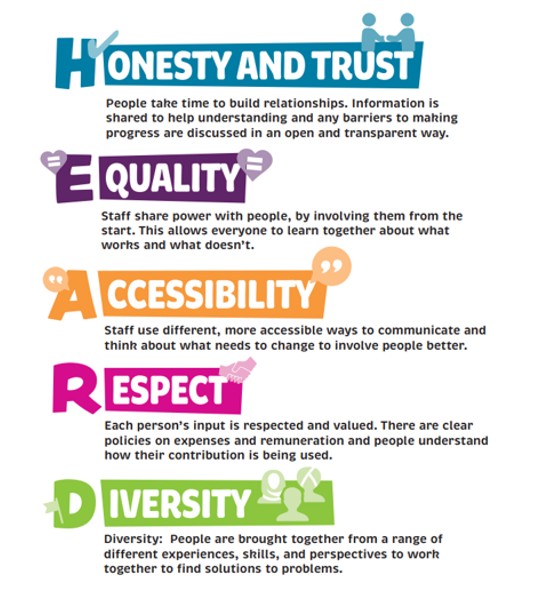
Diagram showing the principles and values of co‑production, including valuing people’s lived experience, working in equal partnership, building trust, being inclusive, using clear and accessible communication, sharing power, and learning and improving together.
The Flower of Participation
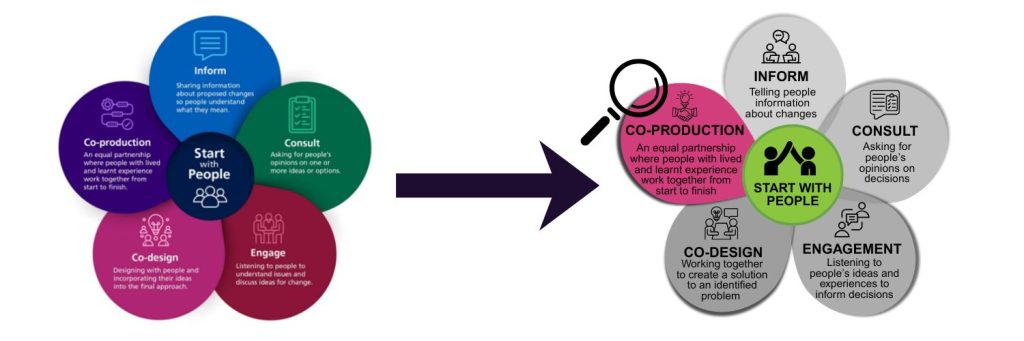
The Flower of Participation diagram shows the different ways people and communities can be involved in shaping health and care, with people at the centre to reflect our belief that health and care should always start with what matters to them. It illustrates a range of approaches, from “doing to” people, where decisions are made for them, to “doing with” people. We are focusing on the co‑production petal of the flower, which is the most collaborative and empowering approach, based on equal partnership and shared decision‑making.
The approaches shown in the Flower of Participation diagram are outlined below:
Co-production:
An equal partnership where people with lived and learnt experience work together from start to finish.
“What are the biggest priorities and how can we work together to achieve them?“
While co-production represents the highest level of partnership, the flower highlights the other types of participation approaches that support different levels of involvement. These include:
Co-design:
Co-design involves working with people who use services to design the support they want and need, based on their own experiences and ideas. They have genuine influence in shaping services that are then delivered for them.
“This is what we want to achieve. How should we go about it?”
Engage:
Engagement means working with people to understand their views and experiences by asking open questions. While people may influence some decisions, their level of involvement can depend on the timeframes and budget available.
“This is what might happen. What do you think about it?”
Consult:
Consultation involves inviting people to share their opinions on proposed changes, often through surveys or meetings. While this allows some input, the focus is typically on what we need to know, and people may feel their involvement is limited or tokenistic if they are not fully empowered to drive change.
“This is what is happening and why. Do you agree or disagree?”
Inform:
Informing involves sharing information about changes so that people can understand them. This could include producing leaflets, running sessions, or providing online information. It’s a one-way communication where people are updated but not involved in decision-making.
“This is what is happening.”